
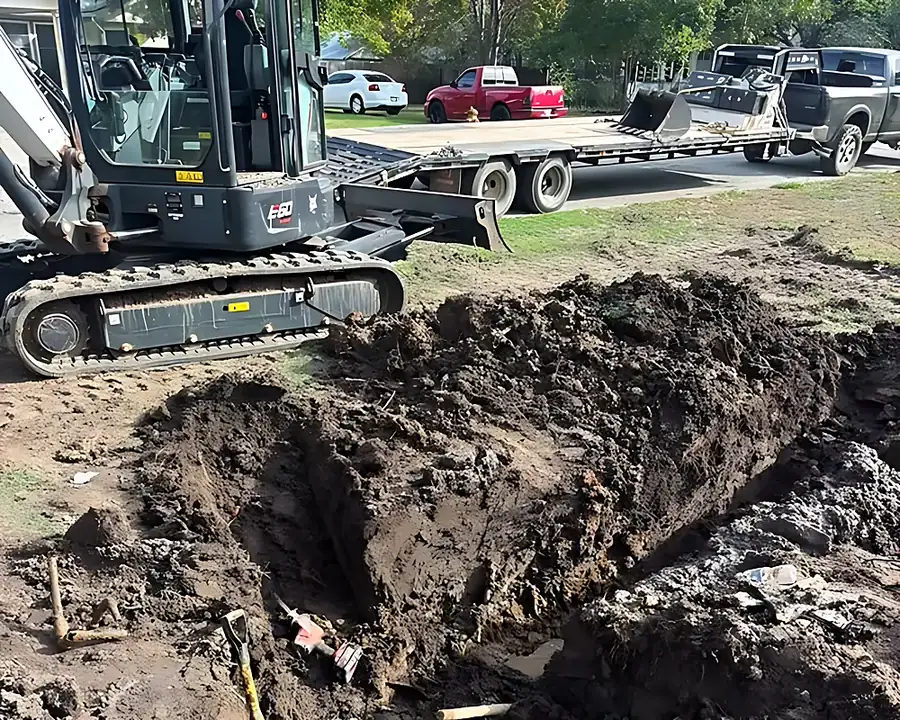
Septic systems in Oklahoma are regulated by the Department of Environmental Quality. New systems and replacements are designed around the soil, need the right approvals, and must be installed by a DEQ-certified installer. Excavation is a big part of the job: the tank hole, the lateral trenches, the line from the house and the backfill. Ask how your excavator and installer split the work.
Conventional and aerobic
Most homes off city sewer around Tulsa have either a conventional system, a tank plus a lateral field that soaks the water into the ground, or an aerobic system that treats the water and sprays it across the yard. Which one your property can use depends largely on the soil.
The soil comes first
Before a new system is designed, the soil is evaluated. Heavy clay, shallow rock and a high water table all limit how fast water soaks in, which decides the system type and how big the field has to be.
Certified installers
Oklahoma requires septic systems to be installed by a DEQ-certified installer, and the DEQ keeps a public list of them. Using a certified installer protects you when you sell the house and keeps the system legal.
Where the excavator fits
The tank hole, the lateral trenches at the designed depth and slope, the trench from the house to the tank, digging out old tanks, and the final backfill and grade are all excavation. The trenches have to match the design exactly. See septic excavation.
Finding a buried tank
If you need a pump-out and nobody knows where the lid is, follow the line from the house, probe for the tank and dig to the lid. Adding risers brings the lids to the surface for next time.
When the field fails
Soggy ground over the laterals, slow drains and sewage smell outside are signs the field is failing. Pumping the tank does not fix a failed field. New laterals usually go in fresh ground.
Common Questions
Can any excavator install a septic system in Oklahoma?
No. Septic system installation requires a DEQ-certified installer.
How deep are lateral lines?
The design sets the depth. It is usually fairly shallow so the soil can treat the water.
Can you dig septic trenches when it is wet?
It is better not to. Working saturated clay smears the trench walls and can hurt how well the field drains.
What to Do Next
Need a tank found, a line dug or the excavation for septic work? Call (918) 320-3439.