
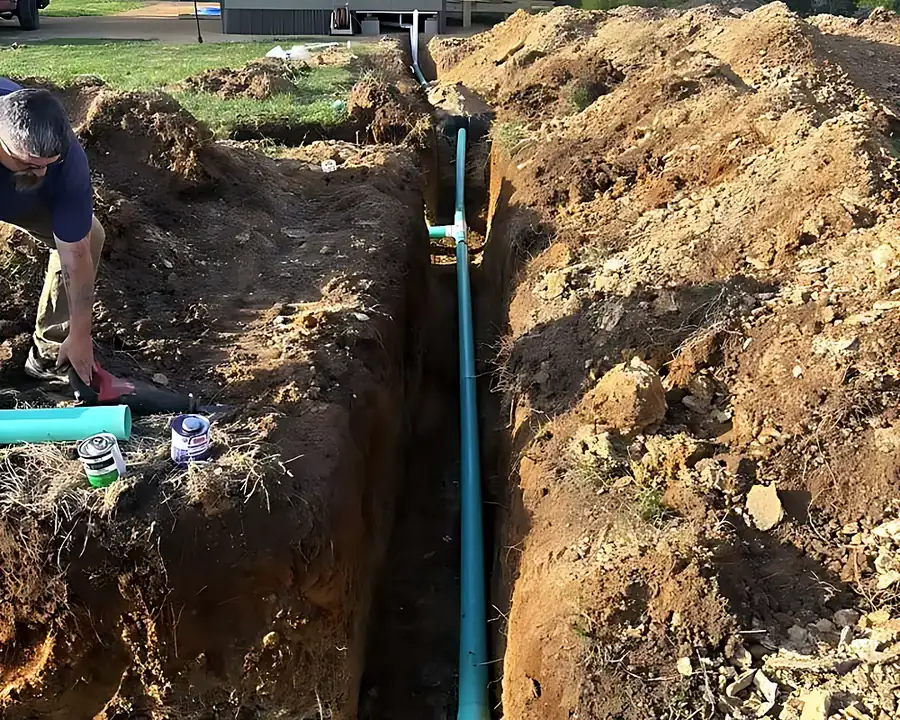
On a sewer line repair, the digging is often the bigger part of the job. What moves it: how deep the line is, how long a section has to be exposed, what sits on top (lawn, drive, patio), how close it is to the house and other lines, the soil, and whether it is an emergency. Redden Excavation gives you the price for the dig before we start.
Depth
Laterals near the house can be shallow. Near the main they can be much deeper. Deeper holes move more dirt and, past a certain depth, have to be wider or sloped so the plumber can work in them safely.
Spot repair or full run
One broken joint means one hole. A failing line end to end means a trench the whole way. The camera inspection decides which, so get it done first.
What is on top
Lawn is the cheapest thing to dig through. Concrete drives, sidewalks and patios have to be cut, broken out and hauled, and replaced later by someone else.
Access and tight spots
Laterals often run under fenced back yards, beside foundations and under big trees. The mini excavator handles it, but tight spots and hand digging near the house take time.
Ground and water
Clay, sand, rock and groundwater all change how long a dig takes and how the hole is kept safe.
Trenchless vs open dig
Lining or bursting can save a long trench, though it usually still needs pits. Ask your plumber to compare total cost, including the digging and the yard repair.
Common Questions
Who pays for the digging?
Usually the owner, as part of the repair. Some plumbers include the excavation in their price, others have you hire it.
Can I save money by digging myself?
Hand-digging a deep sewer trench is hard, slow and dangerous near the bottom. Trench cave-ins kill people.
Does insurance cover it?
Ask your agent. Some policies and add-ons cover service lines.
Getting a Real Number for Your Job
Get a straight price for the dig: call (918) 320-3439 with the address and what the camera found.